Research
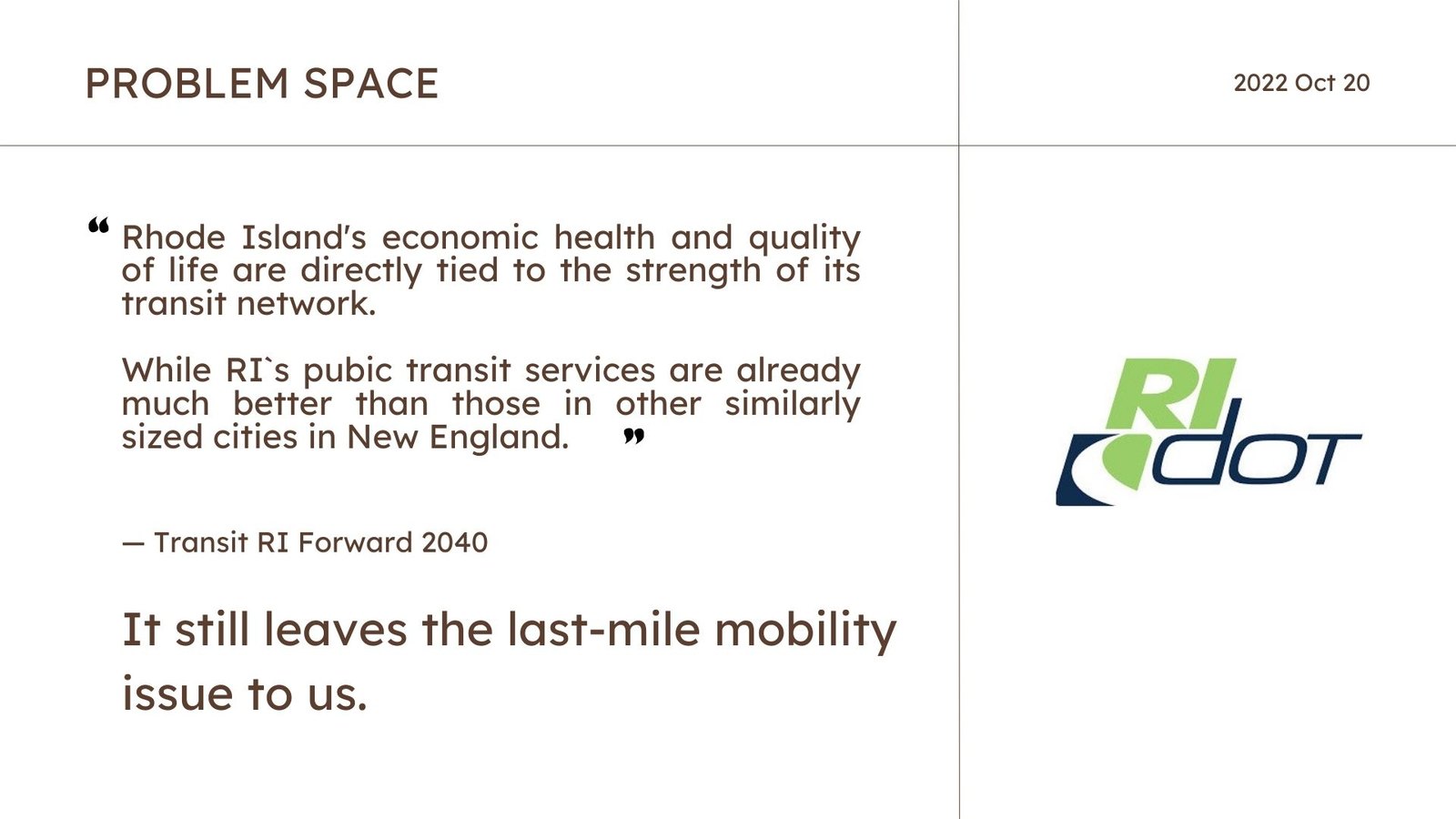
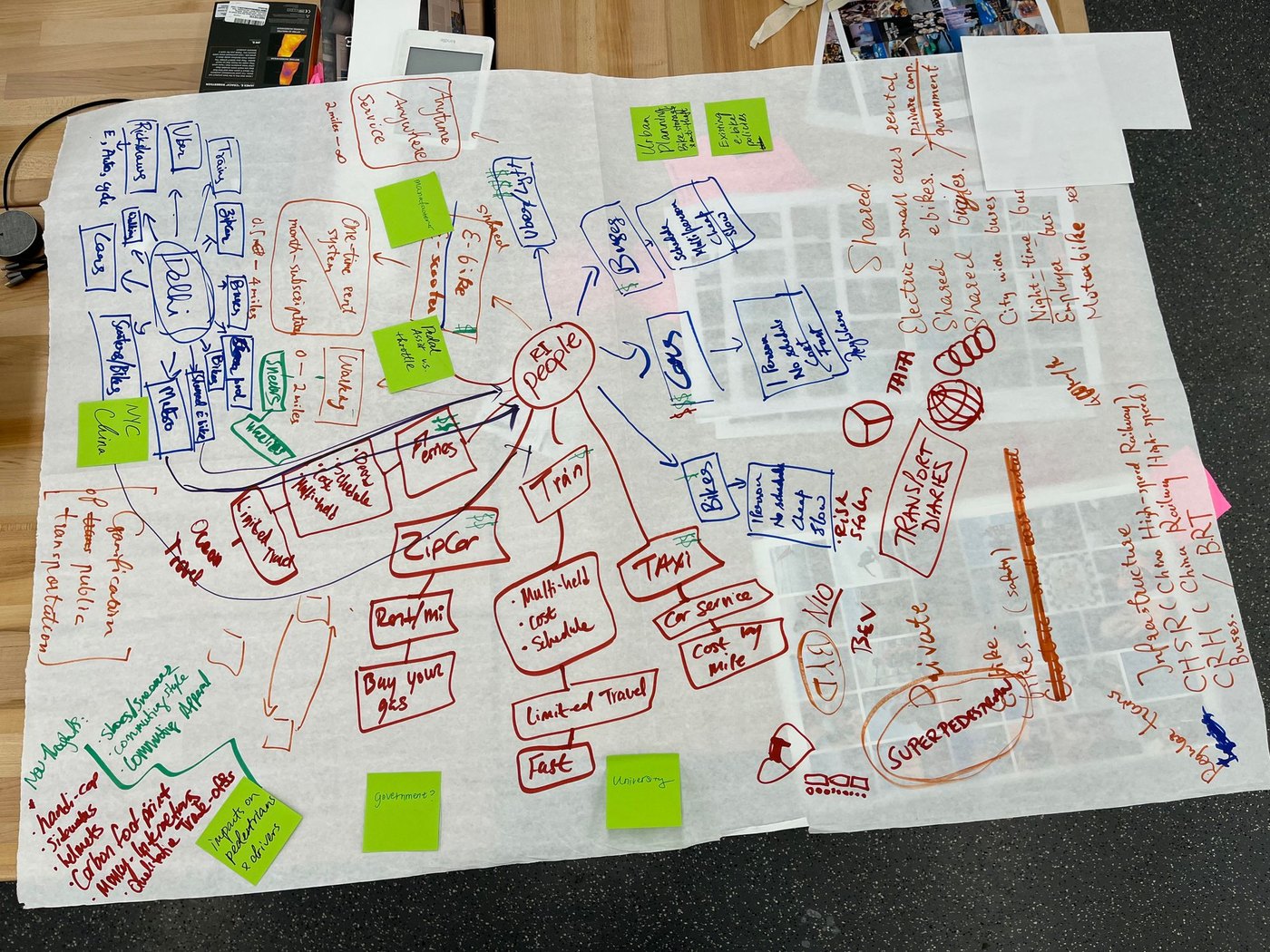
We reviewed RIDOT’s Transit Forward RI 2040 plan, mapped the public transit system, and interviewed city planners, RIDOT staff, micromobility operators and riders. We also ran a survey.
From interviews with six residents we learned three things. Providence is walkable most of the time, public transit is rarely on time, and most people like e-scooters and e-bikes.
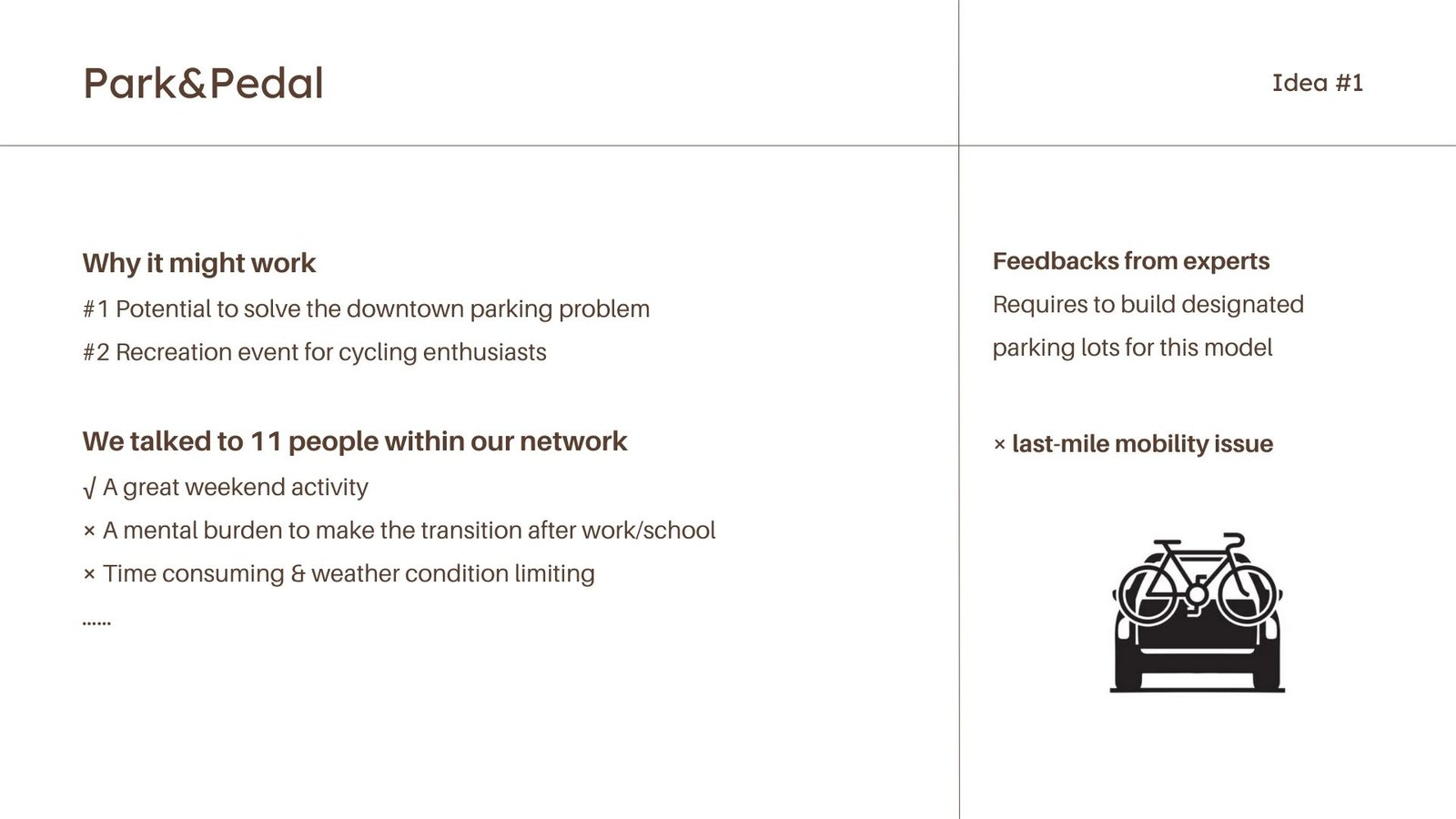
First idea: Park & Pedal
Our first concept was a network of parking stations within cycling distance of the city’s main work areas. People would drive in, park, and bike the rest of the way.
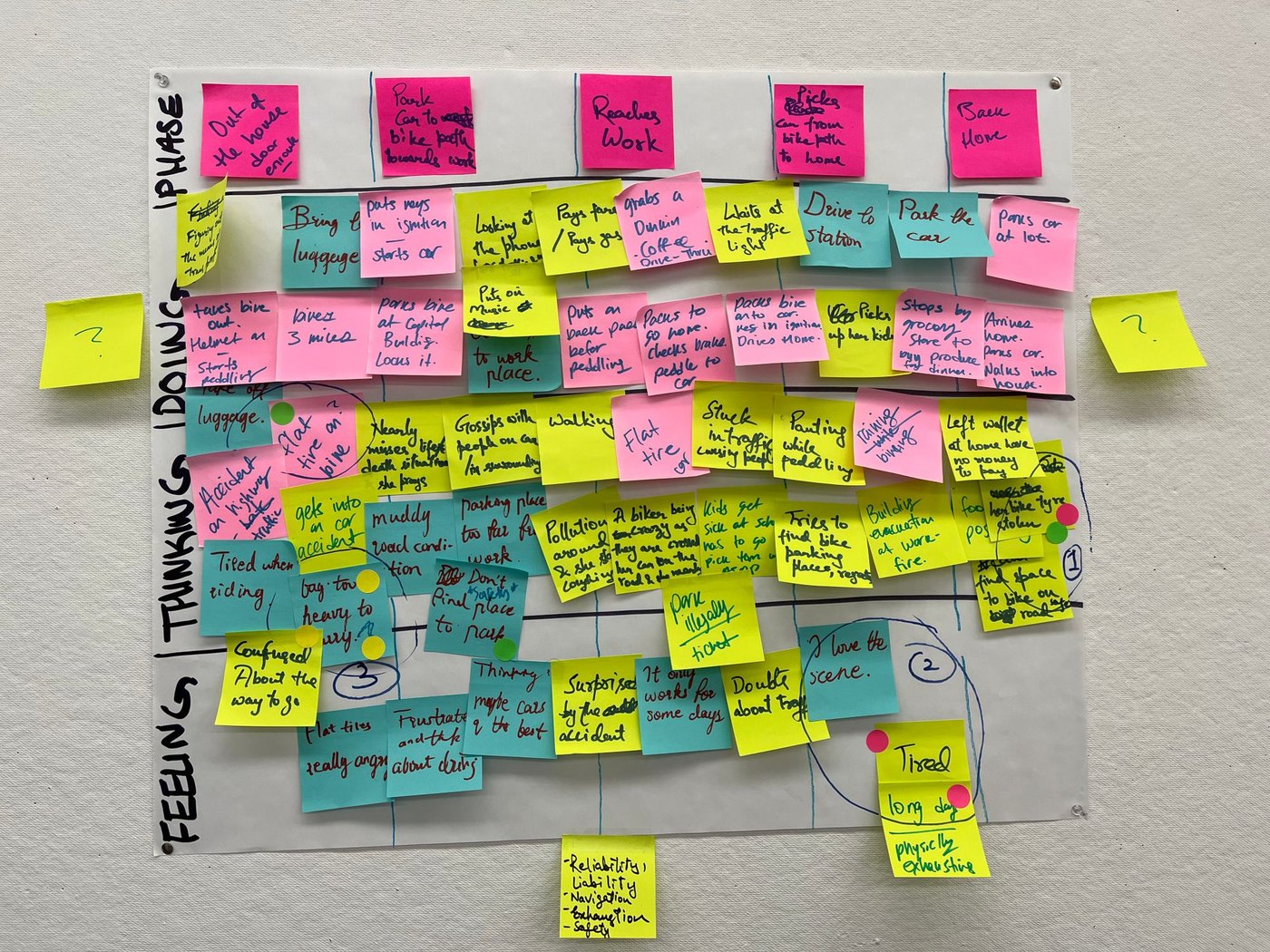
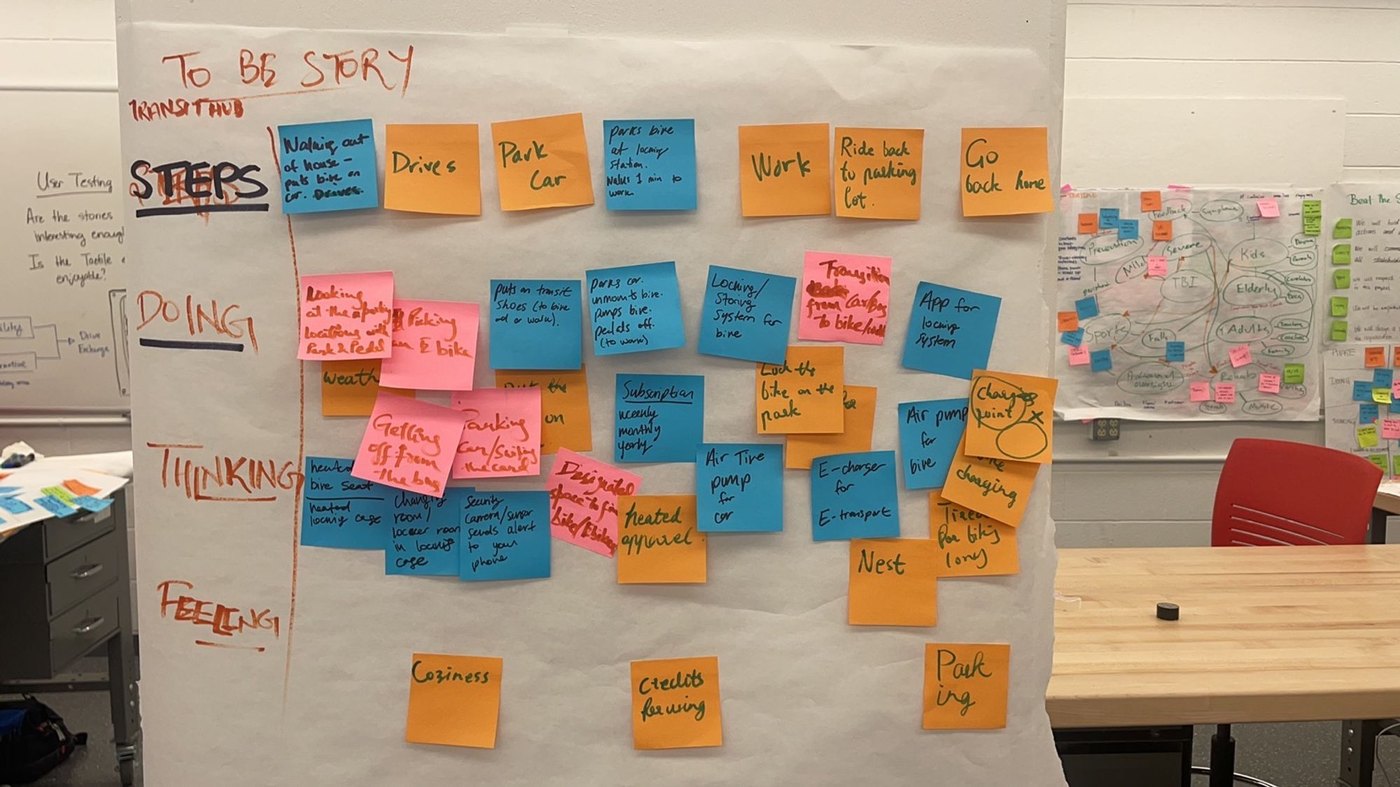
People said it sounded nice for weekends or for serious cyclists, but not much beyond that. Providence doesn’t have a big-city parking problem, switching from car to bike after work felt like a hassle, and it took extra time and depended on the weather. A second journey map showed it wouldn’t fix the last mile, so we dropped it.
Pivot
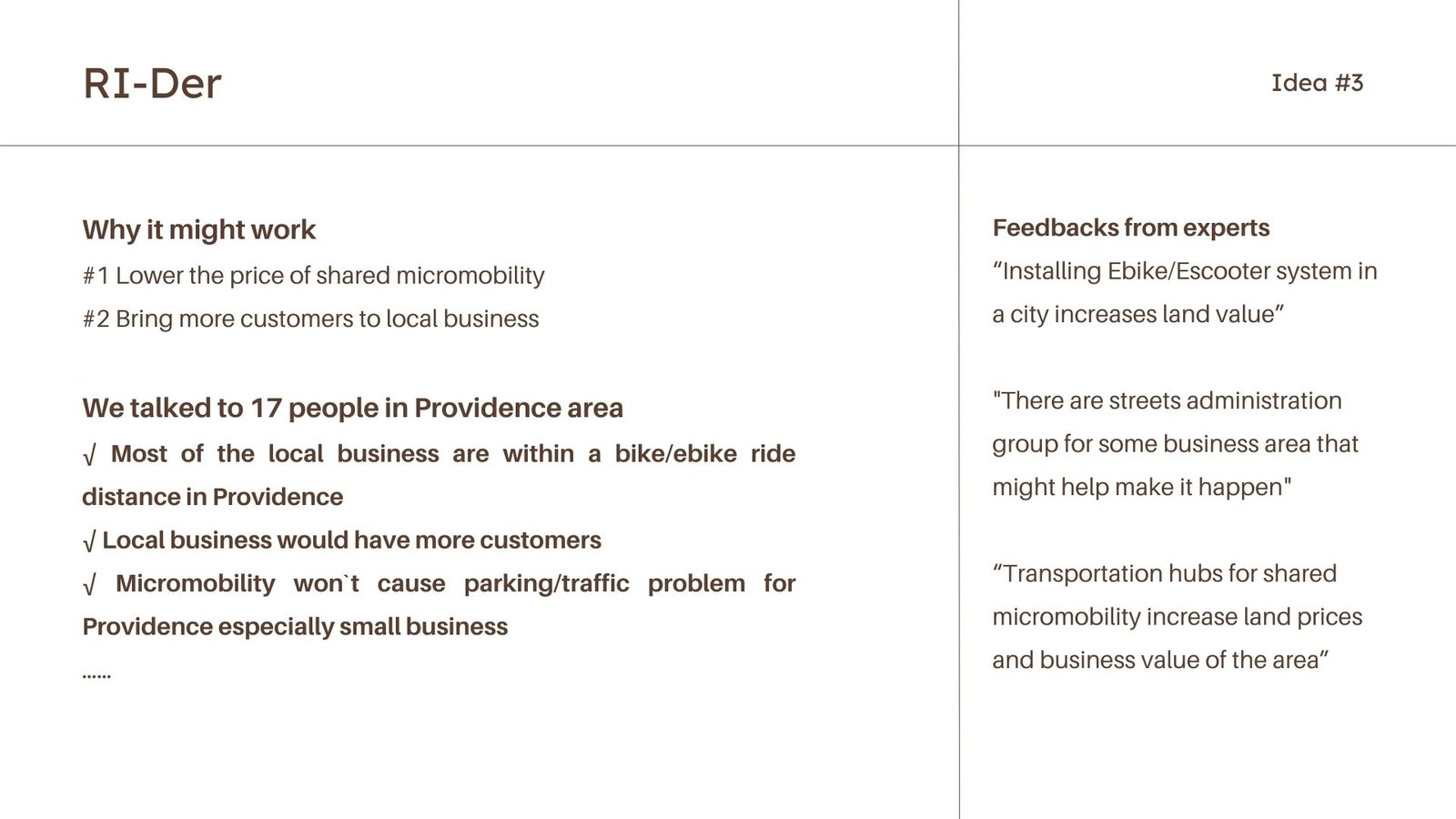
We went back to research and talked to people who had worked in the e-scooter industry, in public transport design, and on legalizing e-bikes in New York. A few things came up. E-bikes and e-scooters could solve Providence’s last mile. People worry about theft, and locks don’t really fix that. Micromobility can raise nearby land prices. And the city wants to regulate it.
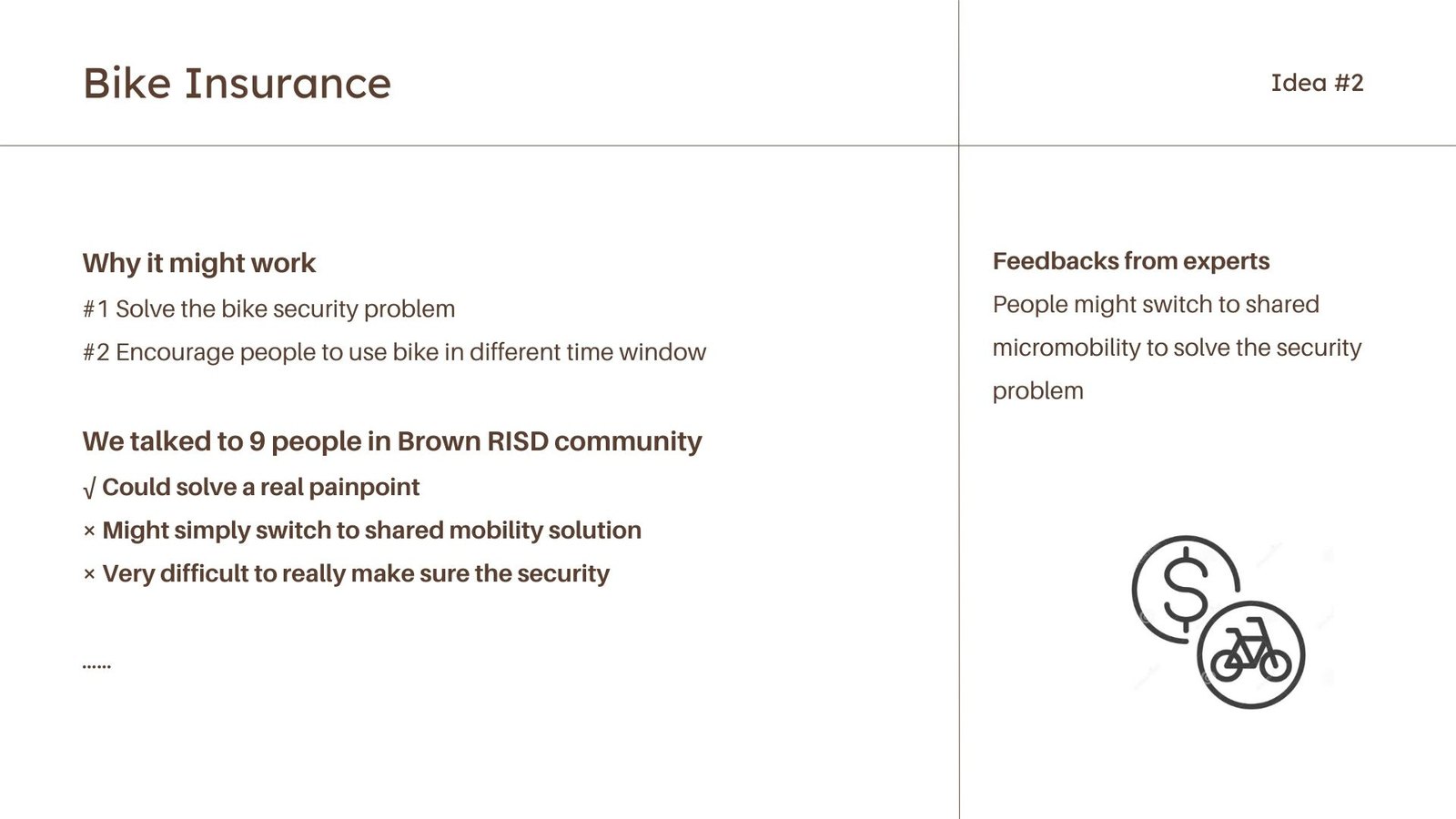
We came up with more than 15 new ideas, ranked them on a prioritization grid, and took two forward:
- Bike insurance. A subscription for private bikes, parked in designated spots watched by smart cameras, with owners reimbursed if a bike is stolen.
- E-bike incentives. A program that rewards people for riding a bike or scooter to local businesses, which also brings down the cost of riding.
Testing with cookies
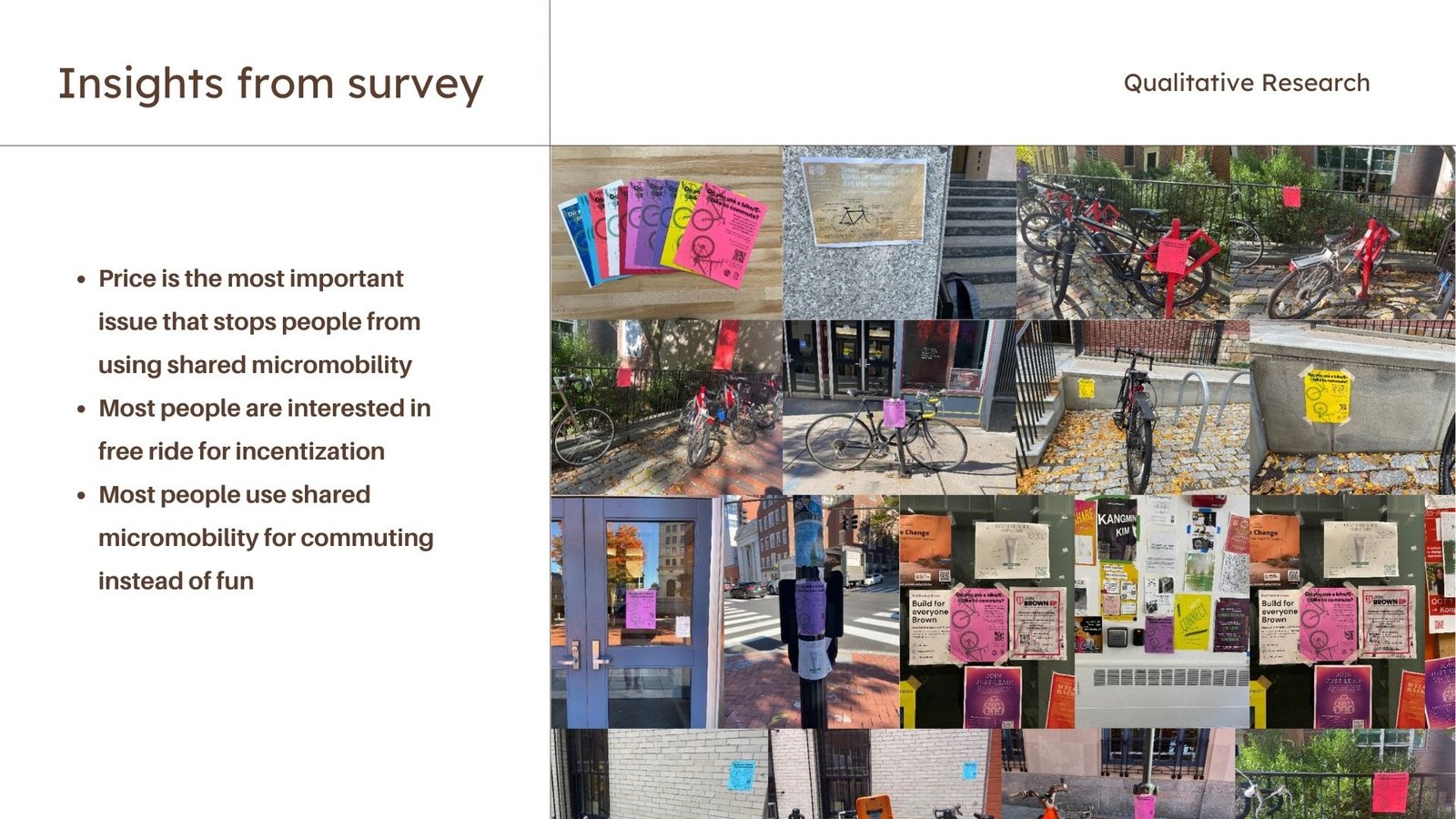
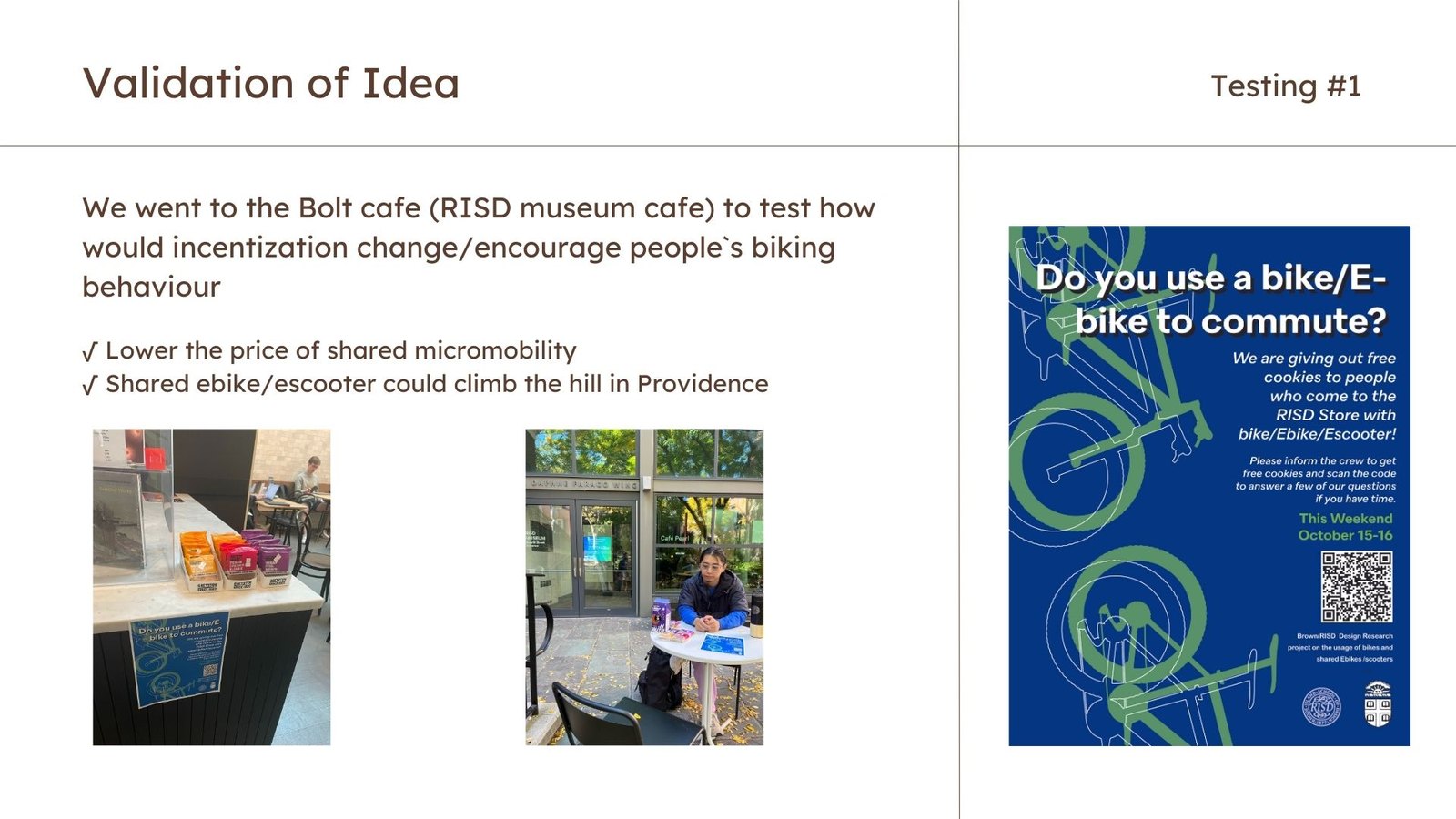
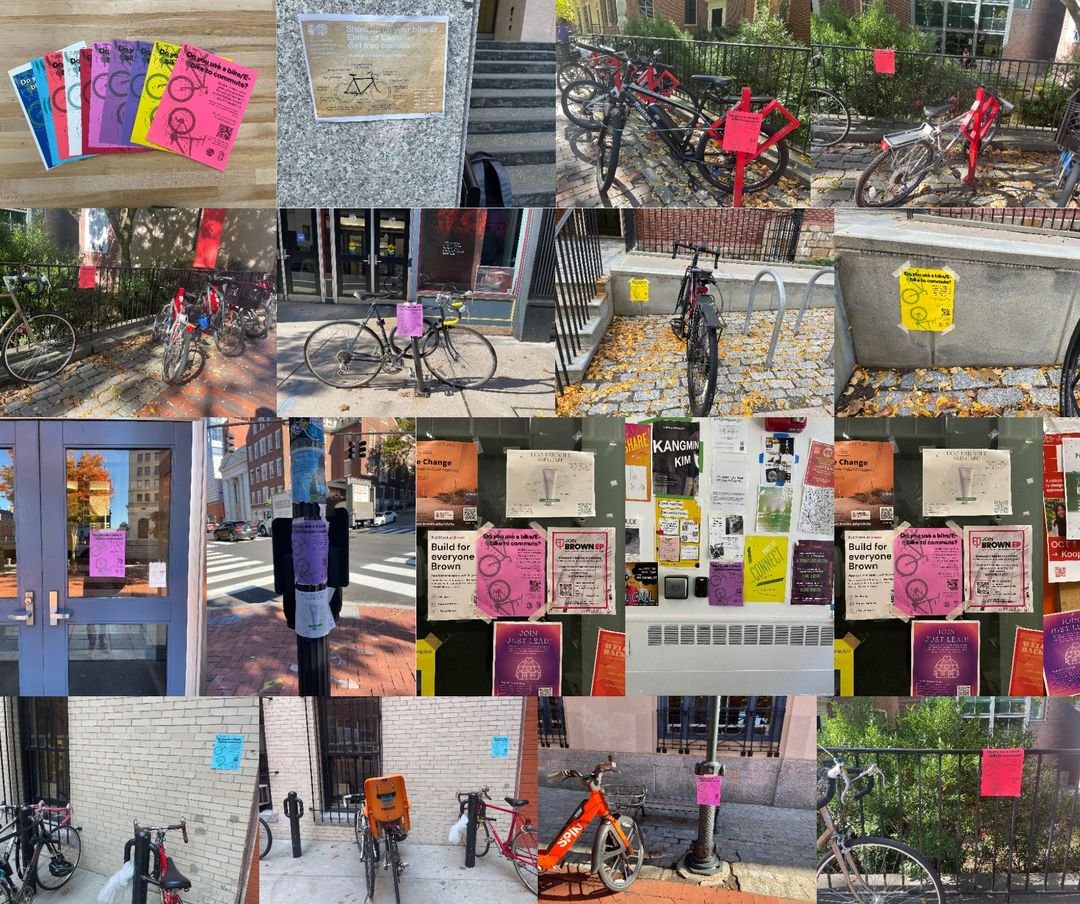
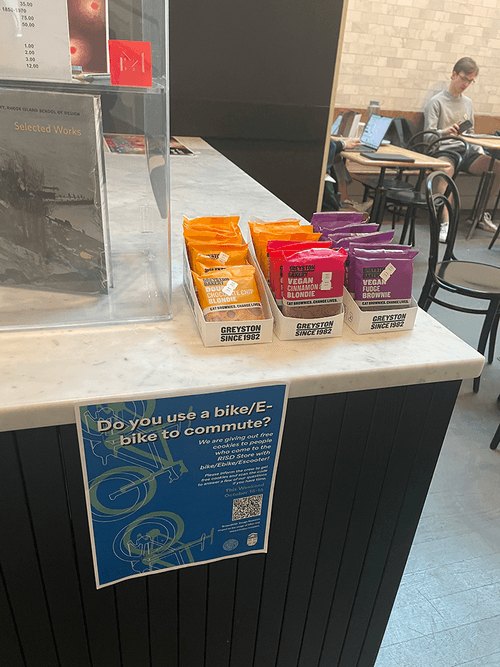
To test the incentive idea cheaply, we gave free cookies at the RISD café to anyone who came by bike or e-bike. The cookies ran out in two weekend days, and a lot of people filled out our survey while they were there.
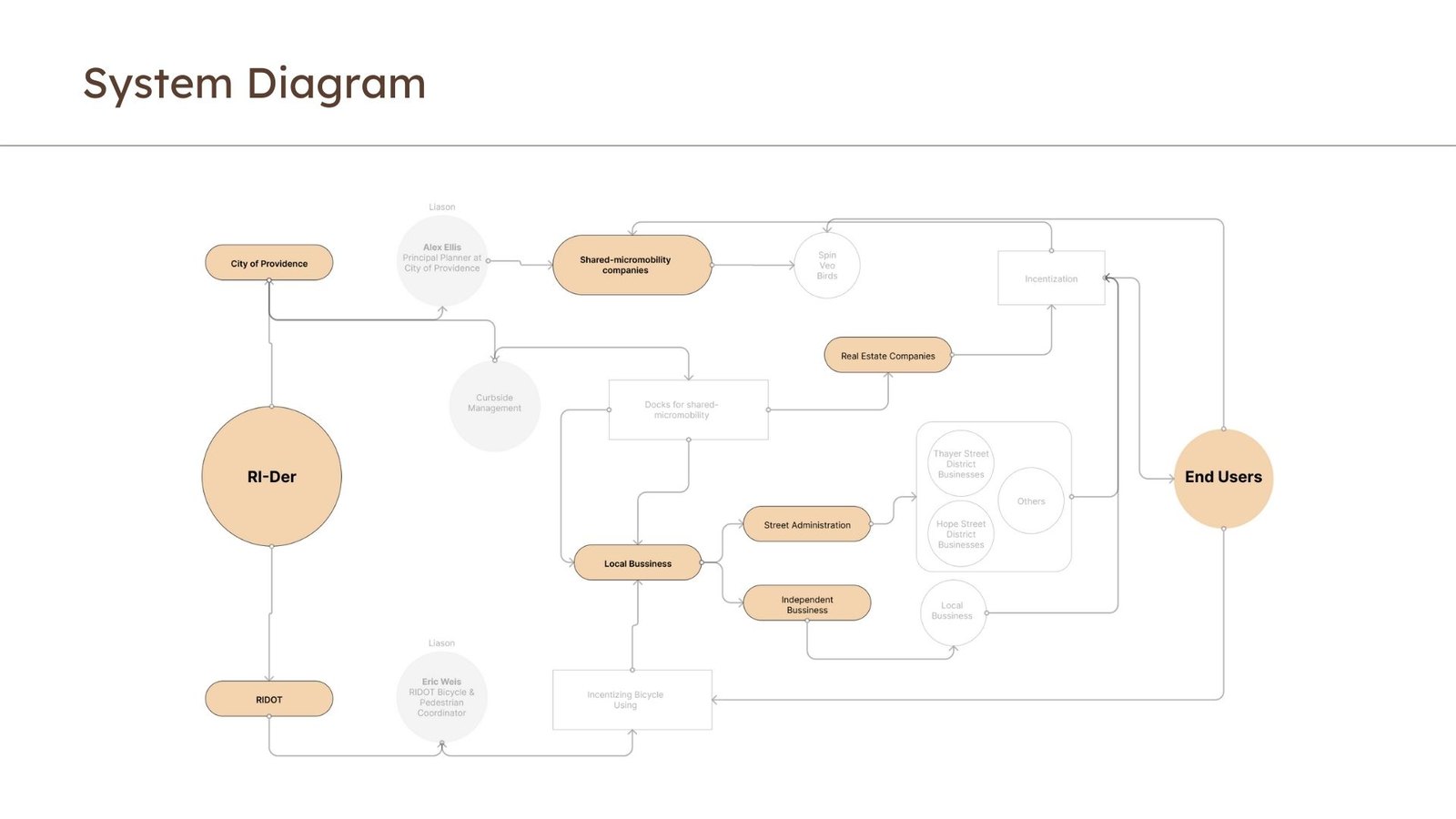
Stakeholders supported cheaper shared e-bikes and scooters. They warned that dockless systems cause problems for the city, and pointed out that docks could help with both land value and incentives. We built the final direction around that feedback.
Thanks
Mentors Andy Law (RISD) and Halley Wultz (IBM); Alex Krogh-Grabble Ellis and Liza Farr at the City of Providence; Andrew Koziol and Eric Weiss at RIDOT; and Yuxin Horatio Han (Superpedestrian) and Jake Moritz.